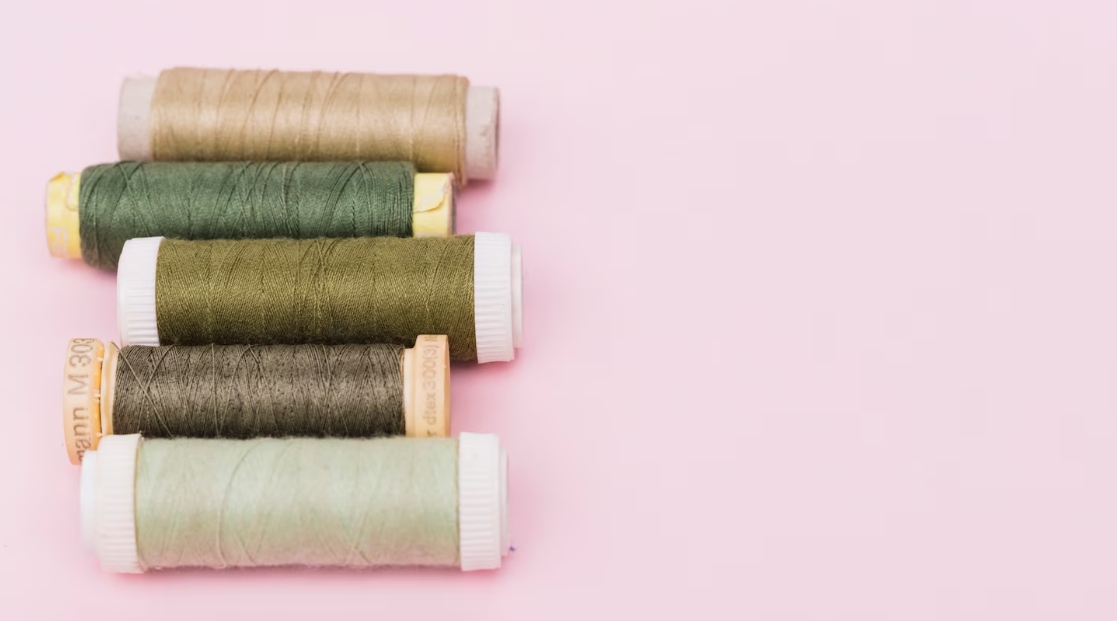
Rain tries to find the smallest door.
Seams are tiny doors.
Most teams close them with wide tapes and thick films. That works, but it adds weight, cost, and sometimes it kills breathability. There’s another path: stitch engineering. Build the seam so water has nowhere easy to go. Then you need little or no tape.
Where water really sneaks in
- Along needle holes (capillary creep on thread).
- Through puddled zones (low spots that collect water).
- At corners and tight curves (stitch bunching makes funnels).
- Under bulky overlaps (pressure pushes water through fibers).
Fix these, and your DWR plus smart seams can pass tough rain tests with light—or zero—taping.
The big idea: stop capillary travel, reduce holes, steer flow
1) Match fiber + thread, and block wicking.
If the shell is polyester, use polyester corespun thread with anti-wick finish in splash lines. Use the smallest passing ticket so the needle is small and holes are tiny.
2) Keep SPI in the safe band.
Too many holes make a perforation line; too few let the seam ladder. As a start: 9–10 SPI for wovens, 10–12 SPI for knits/softshells. Adjust by lab coupons, not guess.
3) Move seams out of puddles.
Shift shoulder seams backward or forward so rain doesn’t sit on them. Lift the yoke low point. Avoid seams right at the hood crown.
4) Smooth the path.
Round corners so stitches don’t crowd. Keep seam allowance constant so that the pressure is even.
Stitch architectures that shed water
- Single 301 over a narrow bond film (3–4 mm) inside the allowance. The film shares load, lets you lower SPI one step, and you often need no tape at all.
- Folded welt seam on woven shells: the stitch sits under a fold, out of direct rain. Add a micro “drip ridge” top-stitch 2–3 mm from the fold to push water away.
- Bound seam with hydrophobic binding for liners and pocket bags. The binding blocks wicking along raw edges.
- Offset seams on raglan/side panels: move the join 3–5 mm off the natural crease to reduce pumping during arm swing.
Minimalist sealing—only where it pays
If you must seal, be precise:
- Targeted dots or short lanes across high-risk stitch clusters (shoulder apex, hood front).
- Films/tapes with similar chemical composition (PET-on-PET, PA-on-PA, PU-on-PU) for bend life.
- Cool-clamp 2–3 s after pressing to lock memory and stop later lift.
- Keep lanes ≤ 4 mm so breathability and hand stay nice.
Needles, tension, and foot pressure
- Start with micro/round point for tightly woven shells; ball-point for knits.
- Downsize one needle from your usual if you can sew cleanly—smaller hole, less capillary pull.
- Lower top tension and presser-foot pressure until loops are neat but not biting. Over-pressure polishes the face and makes wet halos.
Pattern tweaks that do more than tape
- Gusseted tongues/collars and storm flaps that overlap rain direction by a few millimeters.
- Tiny stitch channels or a raised ridge line that acts like a gutter.
- Drop hems so water exits past the seam, not into it.
- Hidden entry points for cords/snaps so hardware does not puncture the shell right where rain hits.
Finish selection matters (PFAS-free friendly, too)
Choose durable water repellents that match the fabric and care route (hydrocarbon, PU/acrylic hybrids, silicone, dendrimer systems). Cure per spec. Under-cure always fails fast in wash. Over-cure can stiffen and create micro-cracks at seams.
A simple lab-style test set you can run in-house
- Spray rating: test new, after 5 washes, after 30 washes.
- Impact penetration: stitched coupon vs. unstitched control. Aim to close the gap.
- Wicking strip at seam: dip 10 mm of a stitched coupon; measure climb after 30 min.
- Wet flex: mist a seam every 1k cycles up to 10k; watch for dark halos and first drip.
- Rain rig (DIY): 5–10 min angled spray on a mannequin. Check inside for damp and mark hot spots.
Troubleshooting quick table
| Symptom | Likely cause | Fast fix |
| Dark halo along seam edge | Wicking thread / big needle / high tension | Switch to anti-wick thread; smaller needle; reduce tension & pressure |
| Leak at corner after 2k flex | Tight radius packs holes | Increase corner radius; drop SPI by 1; add short 3–4 mm film tab |
| Tape lifting by wash 10 | Wrong chemistry / no cool-clamp | Match film to fabric; extend dwell slightly; cool-clamp 2–3 s |
| Seam feels stiff, clammy | Wide film lanes | Narrow to ≤ 4 mm; use fold/welt strategy instead |
| Wet spot at shoulder | Puddle low point | Move seam; add micro drip ridge; targeted seal only there |
“Less tape” reference builds
Light commuter jacket (woven)
- Seam: 301 over 3 mm PU film on shoulders and hood; welt seam at yoke.
- Thread: polyester anti-wick, finest passing ticket (e.g., Tkt 40).
- SPI: 9–10; micro needle NM 80–90.
- Sealing: none on side seams; small film dots at shoulder apex only.
Softshell hoodie (knit face)
- Seam: 301 with narrow film under raglan; bound pockets.
- Thread: anti-wick polyester, Tkt 40.
- SPI: 10–12; ball-point NM 80–90.
- Sealing: none; rely on finish + stitch engineering.
Trail pant (durable woven)
- Seam: double-rail top-stitch with inner 301 construction; add stitch channel at seat seam.
- Thread: anti-wick polyester, Tkt 40 runs / Tkt 30 tacks.
- Sealing: no tape; DWR + channels + offset seam do the work.
One-week pilot plan (real and small)
- Pick one shell.
- Build A/B/C vamps: A) current taped seam, B) 301 + 3 mm film + anti-wick thread, C) B + welt fold + drip ridge.
- Run spray new/5/30 washes, plus wicking strip and wet flex.
- Record time-to-first-halo and total ingress.
- If C equals or beats A, freeze the stitch spec and remove 70–100% of the tape from that area.
Tech-pack lines you can copy
- Seam: 301 lockstitch; SPI 9–10 woven / 10–12 knit; corner radius ≥ 8 mm; allowance 6 mm constant.
- Thread: polyester anti-wick (textured thread), finest passing ticket; color per LAB target.
- Needle: Micro NM 80–90 (woven) / BP 80–90 (knit).
- Film (if used): same-family, width ≤ 4 mm, dwell ___ s, cool-clamp 2–3 s.
- Features: welt fold on yoke; drip ridge 2–3 mm from fold; stitch channel where noted.
- Validation: spray new/5/30; impact penetration; seam wicking ≤ target; wet-flex 10k no halo.
Wrap
Heavy tapes are not the only way to beat rain.
Shrink the holes, calm the path, steer water away, and seal only where data says you must. With stitch engineering first and minimal sealing second, you keep weight low, breathability high, hand feel soft—and still pass the lab.




Be First to Comment